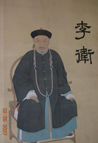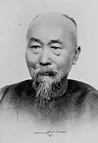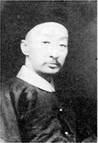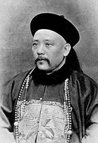
Zeng Guofan
Zeng Guofan (November 26, 1811 – March 12, 1872), originally named Zicheng, went by the courtesy name Bohan and the sobriquet Disheng. He was born in Xiangxiang, Hunan Province. A prominent statesman, strategist, scholar of Neo-Confucianism, and literary figure during the late Qing dynasty, Zeng is best known as the leader of the Xiang Army, a Han Chinese-led militia force that played a pivotal role in defending the Qing regime against internal and external threats.
In 1838, during the 18th year of the Daoguang reign, Zeng passed the imperial examination and was appointed to the Hanlin Academy. He later rose through the ranks to become a Cabinet Scholar, followed by positions as Vice Minister of War and Vice Minister of Rites. In 1852, he was ordered to travel south to oversee the provincial civil service exams; however, on his way, he received news of his mother's passing and was granted leave to return home for mourning duties.
Zeng was renowned for his emphasis on "morality" and "benevolence," deeply revering the teachings of Cheng-Zhu Neo-Confucianism. The following year, in 1853, he was again instructed by the court to recruit local militias in Hunan, thus forming the famed "Xiang Army." By 1854, this newly formed force achieved a decisive victory over the Taiping rebels at Tianjia Town. In 1864, the Xiang Army successfully captured Tianjing, the rebel capital. The next year, Zeng was tasked with leading military campaigns in the north to suppress the Nian Rebellion.
In 1866, he was bestowed with the first-class title of "Yiyong" Marquis by the Qing court—making him the first civilian official ever to receive such an honor. That same year also saw the establishment of the Jiangnan Arsenal, while Zeng simultaneously set up an official educational institution at his Anqing headquarters, where he oversaw the reprinting of classic Confucian texts and historical works.
By 1867, Zeng had been elevated to the position of Grand Secretary. The following year, he was appointed Governor-General of Zhili Province. In 1870, he was assigned to investigate and resolve the infamous "Tianjin Incident," adopting a pragmatic approach aimed at negotiating peace with Western powers. As a result, he was soon recalled to Nanjing to resume his previous post. Tragically, Zeng passed away in 1872.
Zeng Guofan’s rise to prominence left an indelible mark on the Qing dynasty, profoundly influencing its political, military, cultural, and economic landscapes. Under his leadership, China witnessed the construction of its first steamship, the establishment of the nation’s first military-industrial academy, and the dispatch of the first group of students to study in the United States. Moreover, the emergence of the Han Chinese landlord class, spearheaded by Zeng, marked a significant shift in the ethnic balance among Qing officials, gradually tilting the power dynamic toward the Han-dominated regions. This period also witnessed the birth of the "Xiangxiang School," a key literary movement that would shape classical prose in the late Qing era. Alongside Hu Linyi, Zeng was celebrated as one of the "Zeng-Hu duo," while together with Li Hongzhang, Zuo Zongtang, and Zhang Zhidong, he came to be regarded as one of the "Four Great Ministers of the Late Qing Restoration."